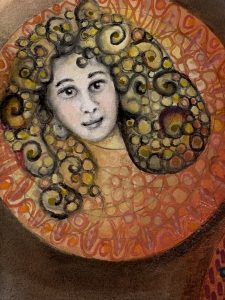
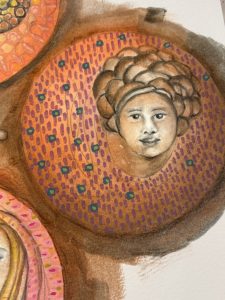
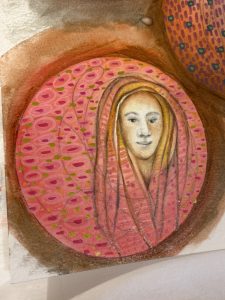
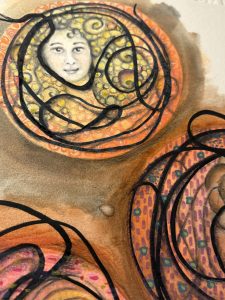
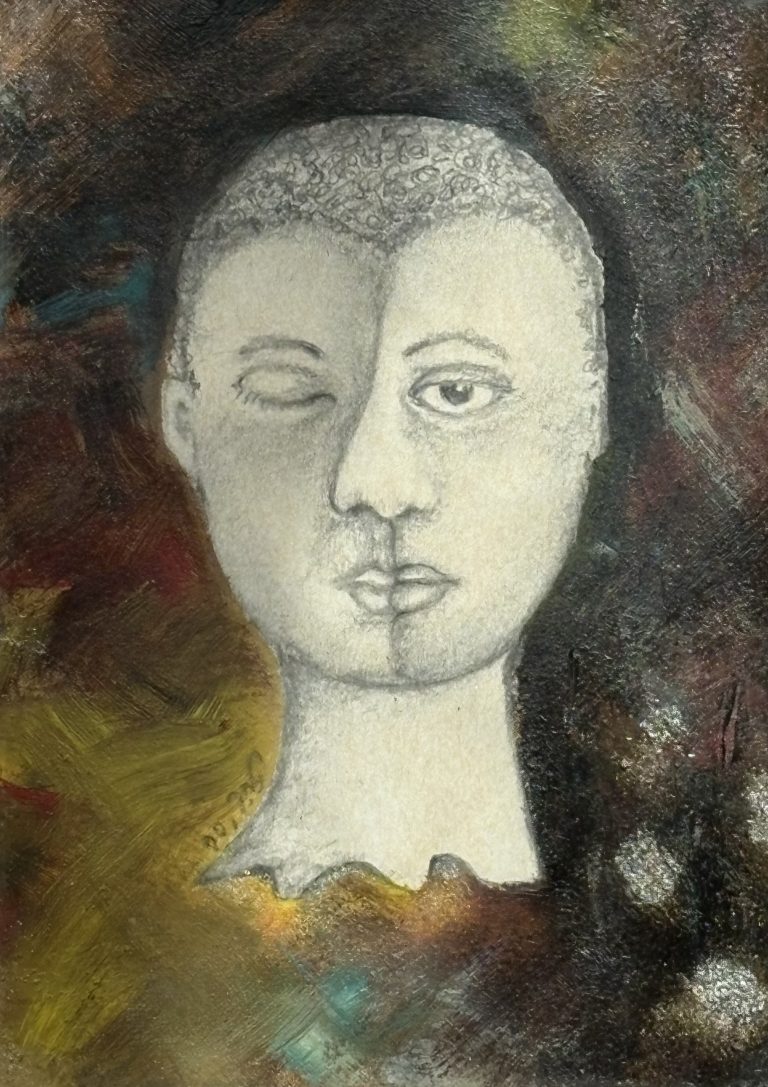
Mother of Hannahanna
In the heart of Asia Minor,
Where mountains rise and rivers stand,
The Hattian goddess, fierce yet kind,
Guarding earth, and soul, and mind.
Her eyes—watchful stars above—
Reflect the strength, the gift of love.
Protector of the land so deep,
Keeper of secrets, old and profound.
Through seasons’ change and time’s embrace,
Her spirit weaves through Hatti’s grace.
From water to soil, from stone to sky,
She breathes the life that will not disappear.
Her name is whispered on the breeze,
In every root, in every tree.
Golden dandelions’ wishes,
She grants the dreams we dare to chase.
The eyes of Earth, the heart of all—
In Hattian echoes, we hear her call.
Reflection:
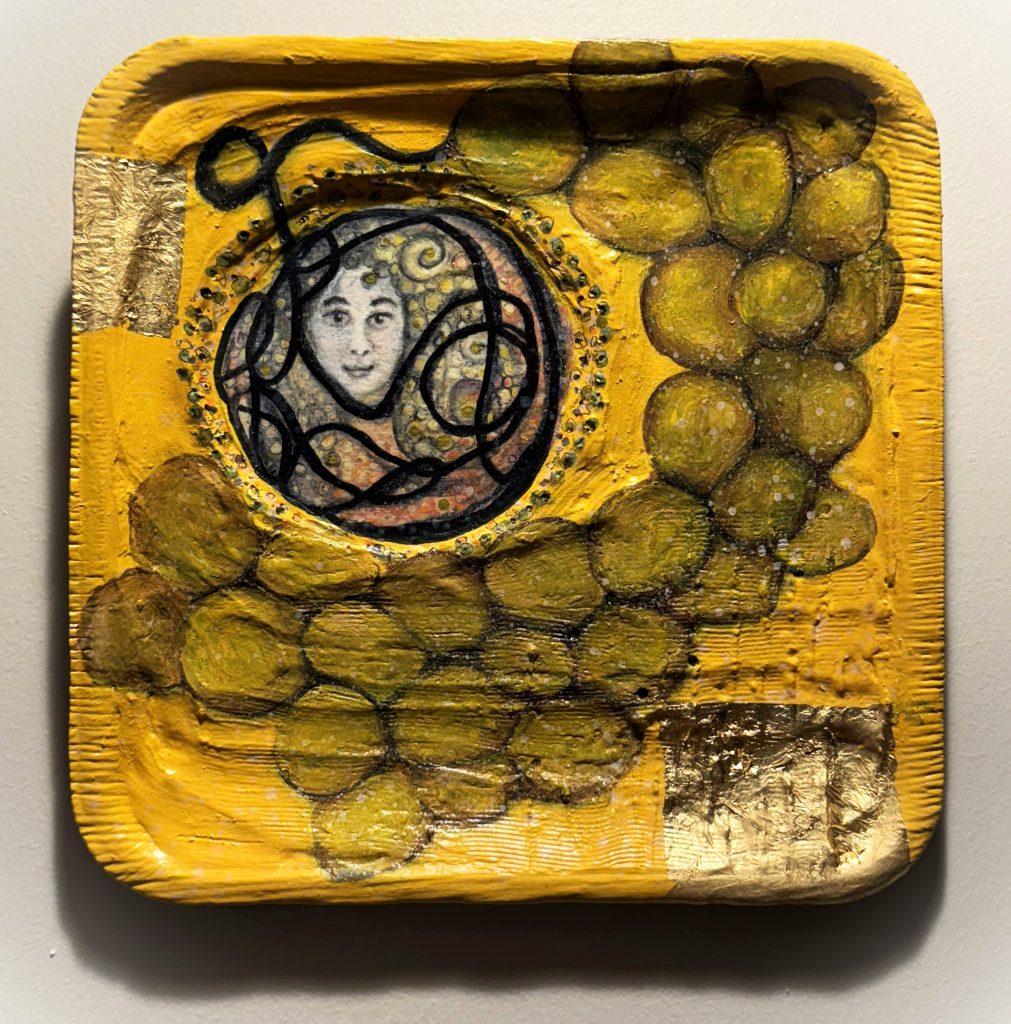
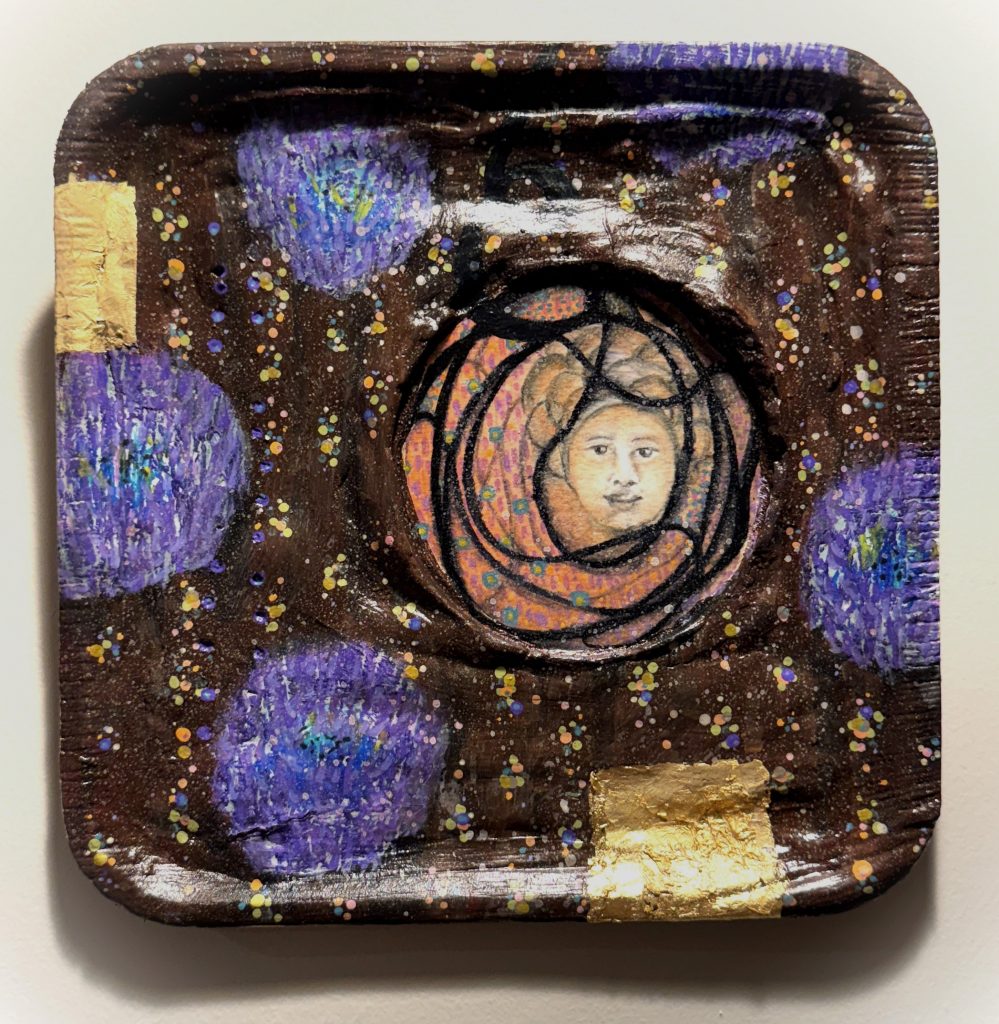
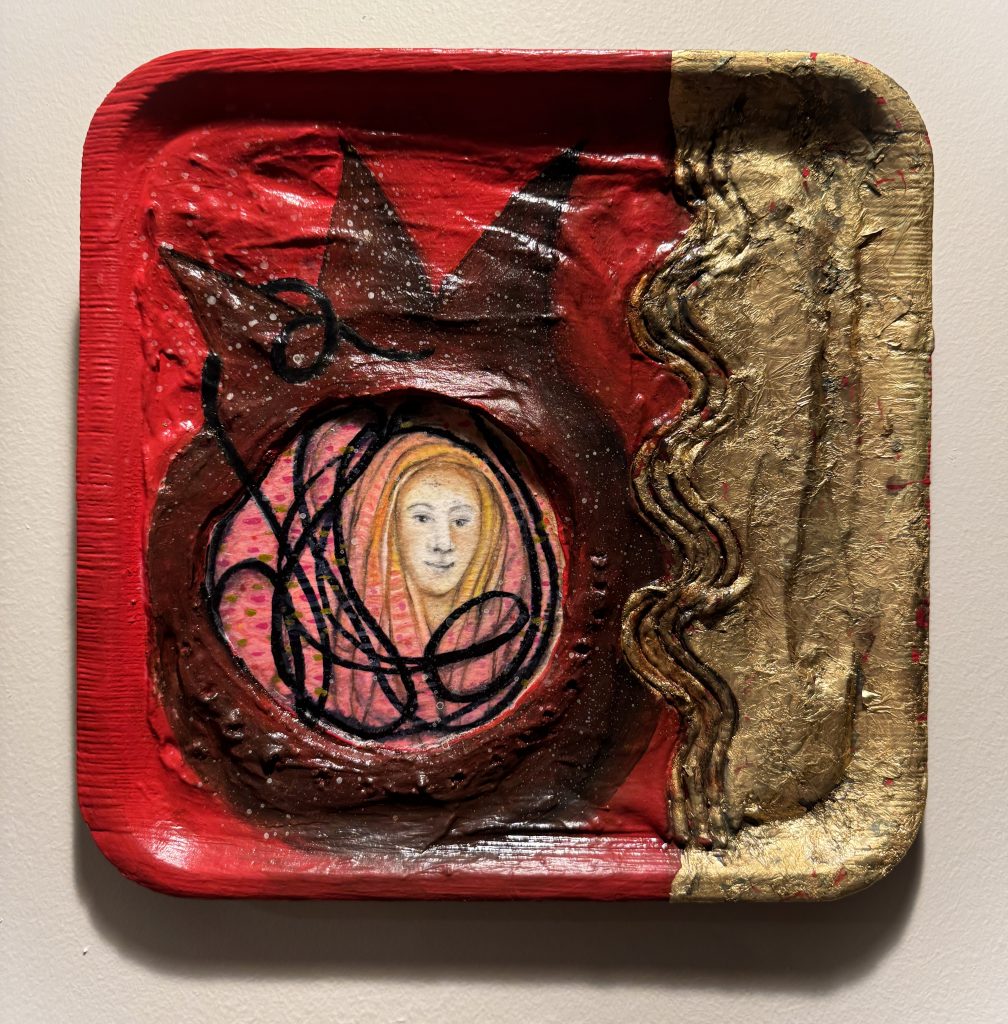
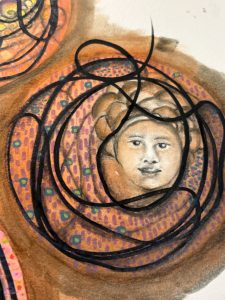
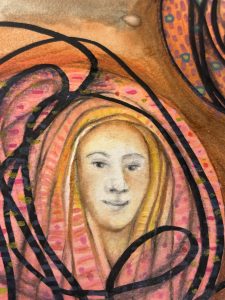
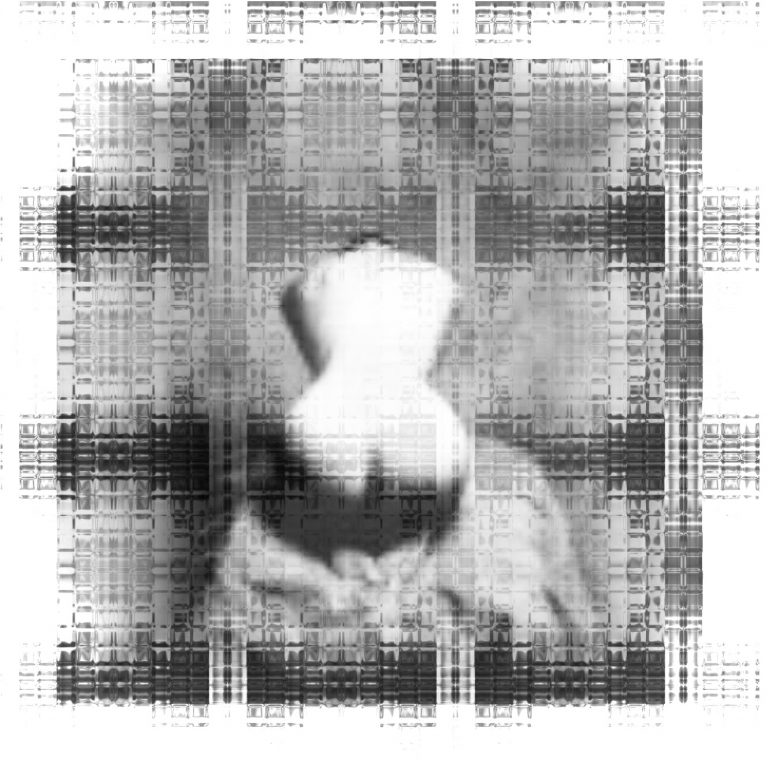
At first glance, some may interpret the figure in the “Mother of Hannahanna” as a voodoo doll—but look closer, and you will meet the Hattian goddess, ancestral mother of Hannahanna. This piece draws inspiration from a 3rd millennium BCE female figurine unearthed at Alacahöyük, a Neolithic settlement near the ancient capital of Hattusa, one of the earliest civilizations in Anatolia. Revered and mysterious, she embodies a lineage of power, protection, and earth-bound wisdom.
Part of the experimental Roots series, this work is presented in a diptych format to explore the fundamental dualities of existence and how they complement one another: humanity and nature, life and death, beginning and end, the ancient and the contemporary, smooth and textured, abstract and detailed, primitive and modern. The connection between the two pieces aims to reflect the paradoxes that define our world and shape our identities, reminding us of the interdependencies that form integral parts of a unified whole.
As you stand before her, however you choose to interpret or find her, ask yourself:
In the 3rd millennium AD, nearly 6,000 years after the origins of this goddess, what truths are we unearthing about our humanity in a constantly evolving world, while we persist in challenging the forces of Mother Nature?
Meet Umay: The Göktürks, known as the “Celestial Turks,” were a powerful nomadic people of the 6th century, roaming the vast steppes of Central Asia. They forged early Turkic identity, language, and spirituality, honoring divine forces like Umay — the goddess of birth, protection, and motherhood.
The Roots is an exploration of civilizations and the enduring tension between power and powerlessness — between nature and humanity, the mundane and the imaginative, gods and those who dared to become them. It traces the arc of human growth and expansion, from gender dynamics and tribal identities to migration and the search for new horizons spanning vast geographies, the cosmos, virtual dimensions, and the imagined in-between of third spaces. At its core, the work reflects on the deep interconnectivity between humans and the natural world, as well as the bonds — fragile, evolving, and resilient — that link humanity across time, space, and culture. Roots is an approach to remembering the past, reflecting on the present, and making meaning for the future.
Everyday objects, industrial designs, and architectural details are reimagined and transformed.
A maze-like carved iron door is reborn as royal attire for little princesses and kings—digital images are cut out, mounted on raw paper, and brought to life with vivid colors and hand-drawn embellishments. The traditional Ottoman shoe, çarık, is given new ‘faces’— reinterpreted with a playful touch. These visual transformations were not only thematic but also purposeful—some works were commissioned for private collections, while others were sold to support initiatives focused on girls’ education, women’s empowerment, cultural heritage preservation, sustainability, and more.
From whimsical takes on tellaks in the hammam to unexpected reinterpretations of familiar forms, each piece challenges perception. Digital images are transformed and reimagined, merging seamlessly with traditional media. Past, present, and future intertwine—transcending ownership, place, position, and technique.
Not everything is what it seems—what we see may not be what it truly is.
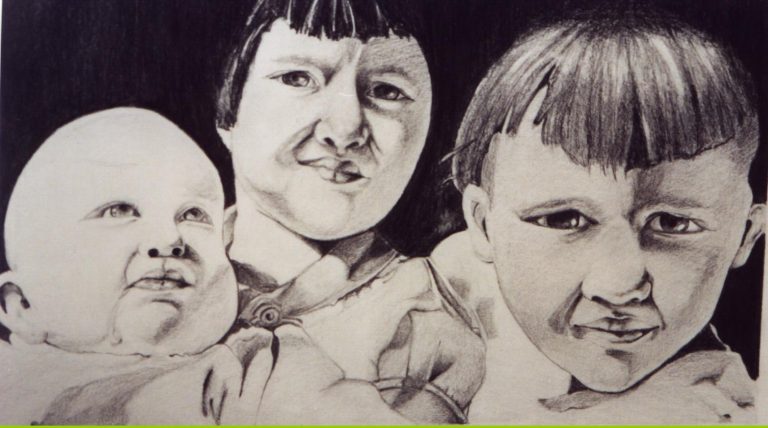
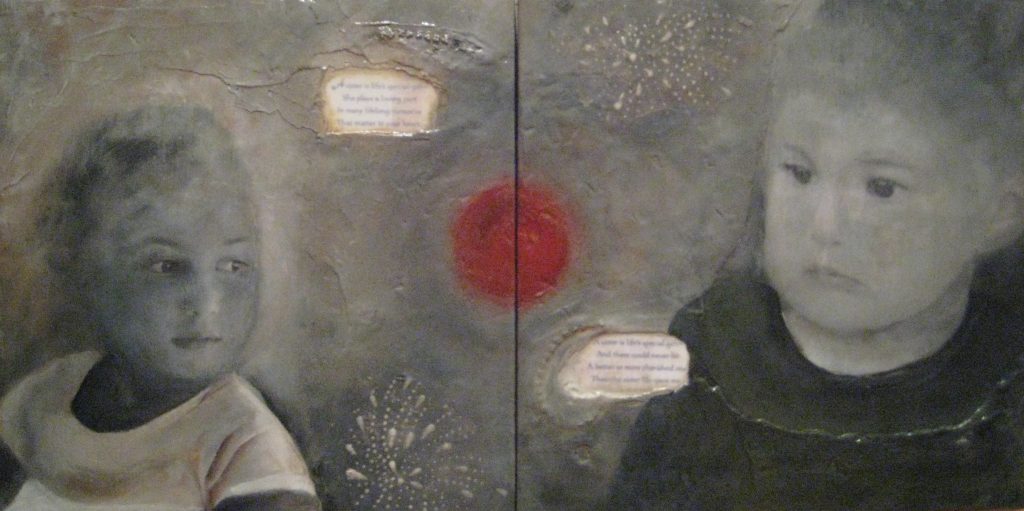
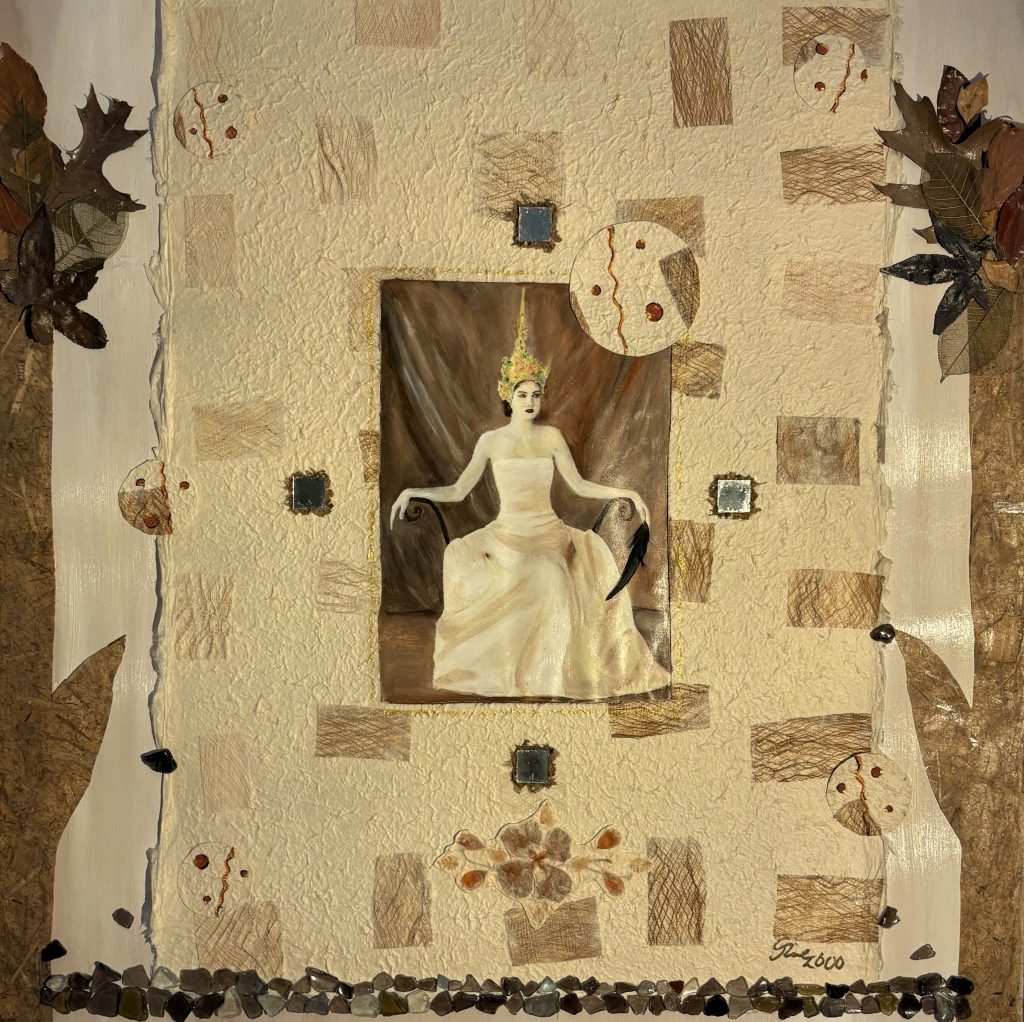
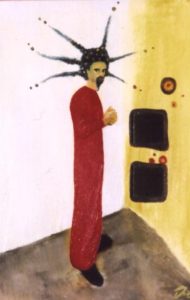
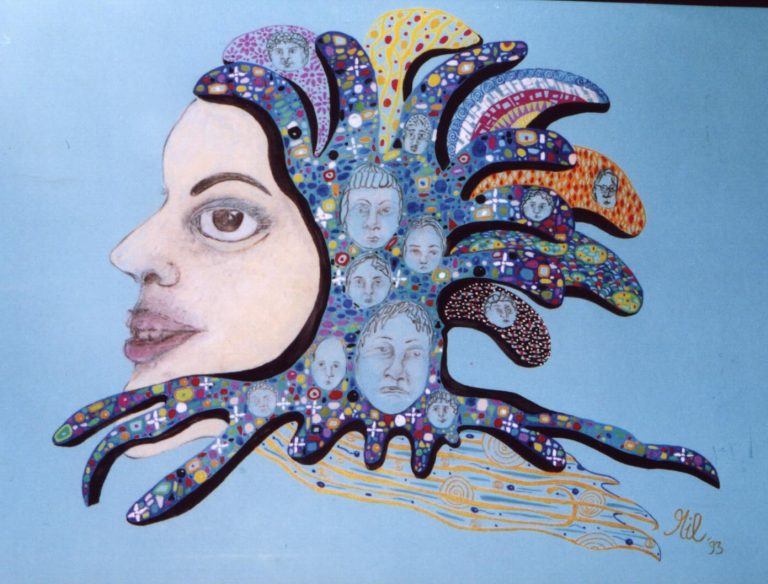
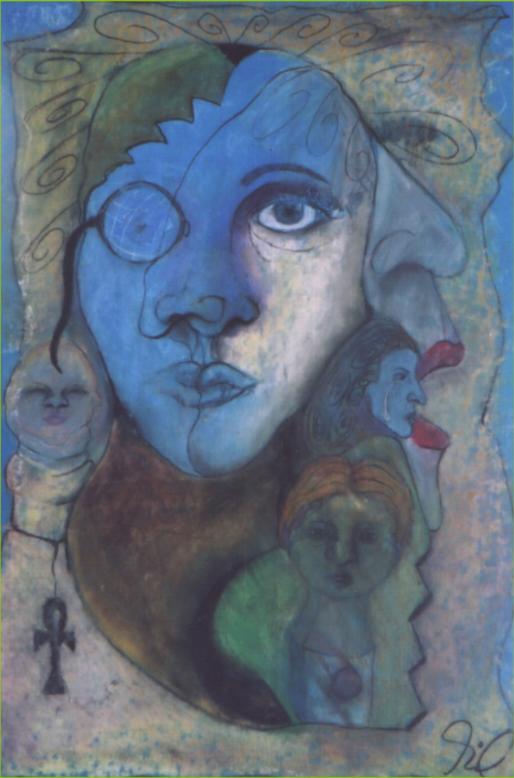
Portrait Practice is an ongoing exploration of commissioned (real) and imagined facial forms and expressions, working across diverse media, materials, and modes of presentation.


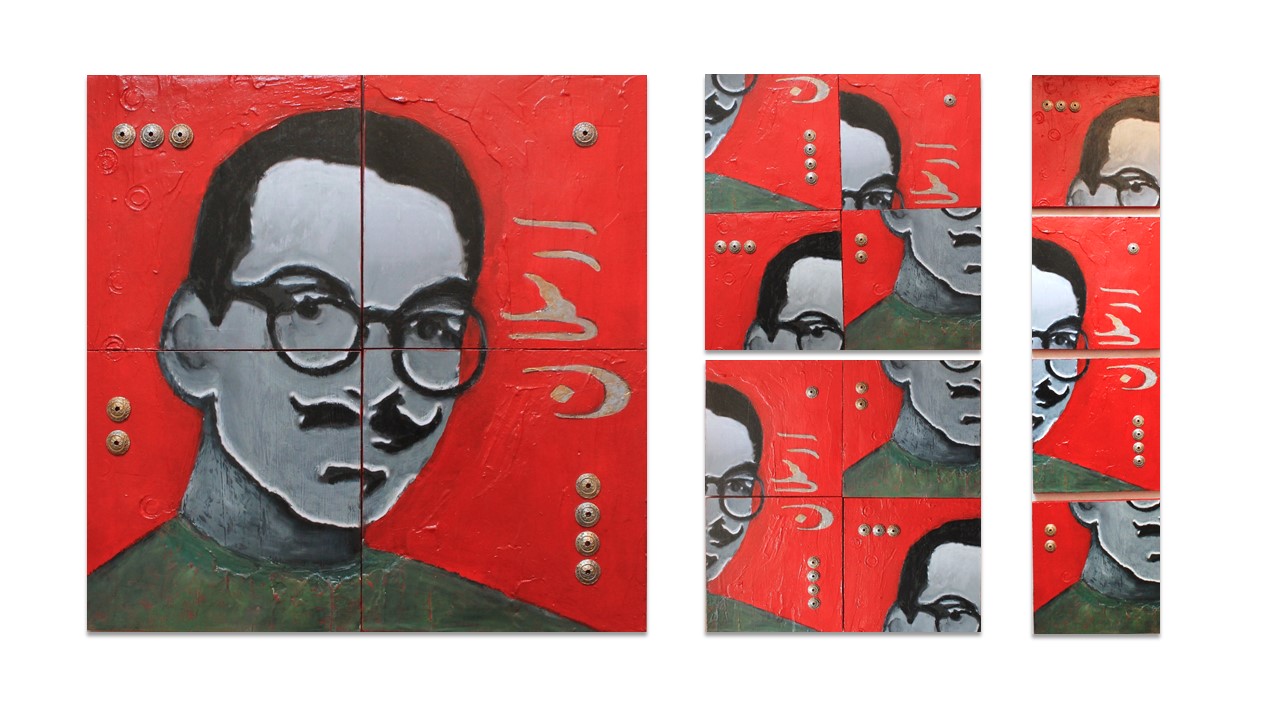
It’s Me, Again! (2012), for example, is a quadtych, mixed media on wood (50 × 50 cm), blending humor and playfulness with deeper reflections on identity.
This interactive portrait incorporates ethnocentric and heritage-inspired elements, featuring four movable sections that can be continuously rearranged. The shifting composition reflects the fluidity of identity, memory, and self-definition over time, acknowledging the layered cultural influences, experiences, and narratives that shape who we are and what matters most to us.
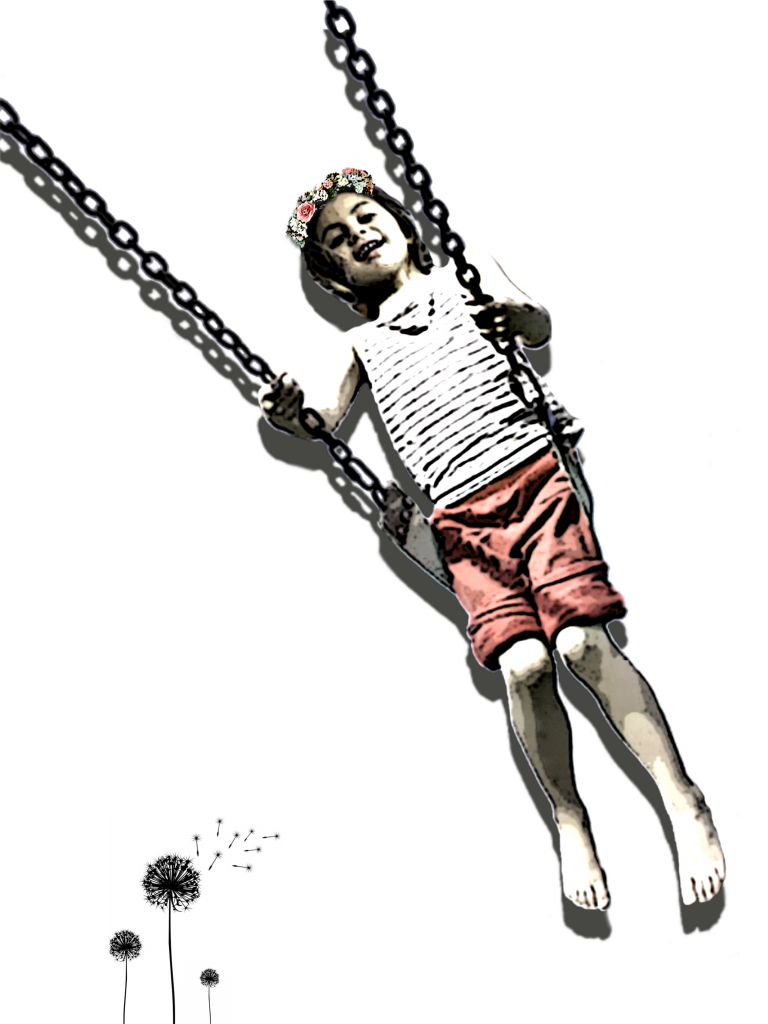
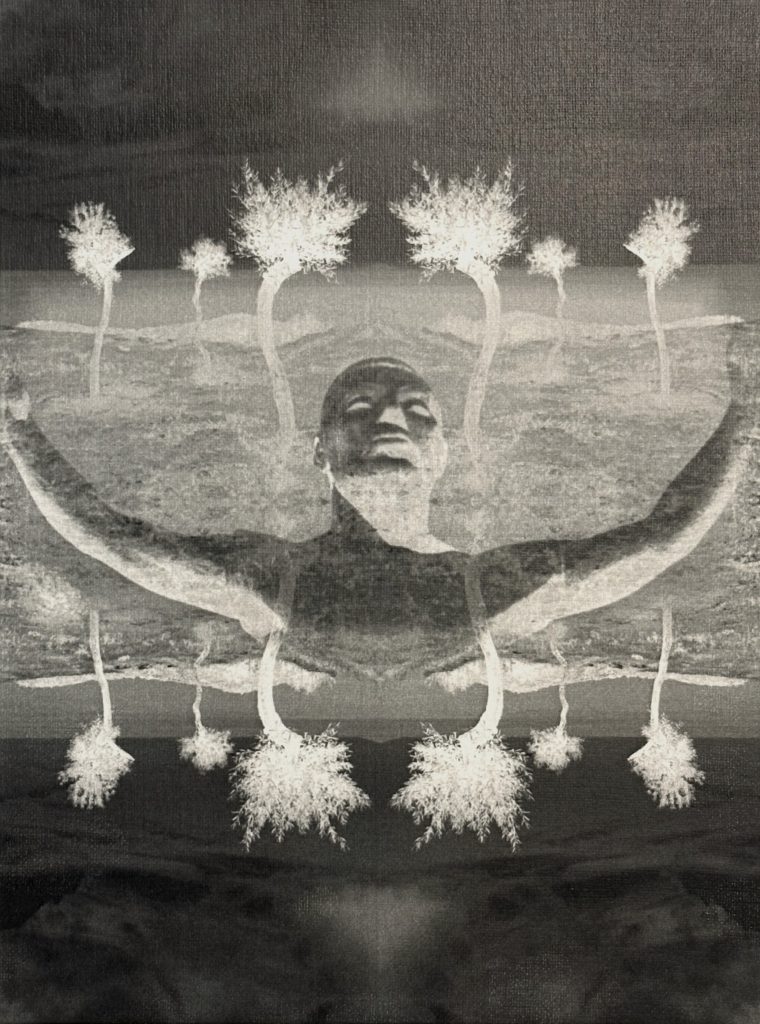
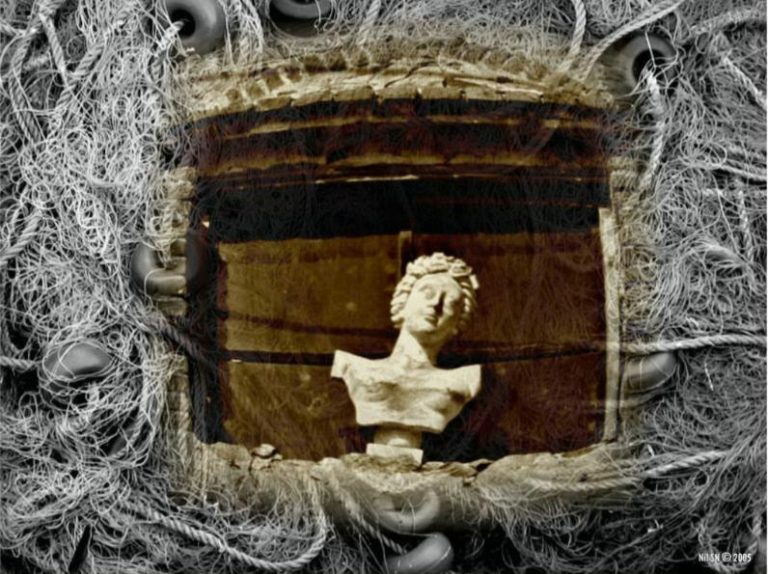
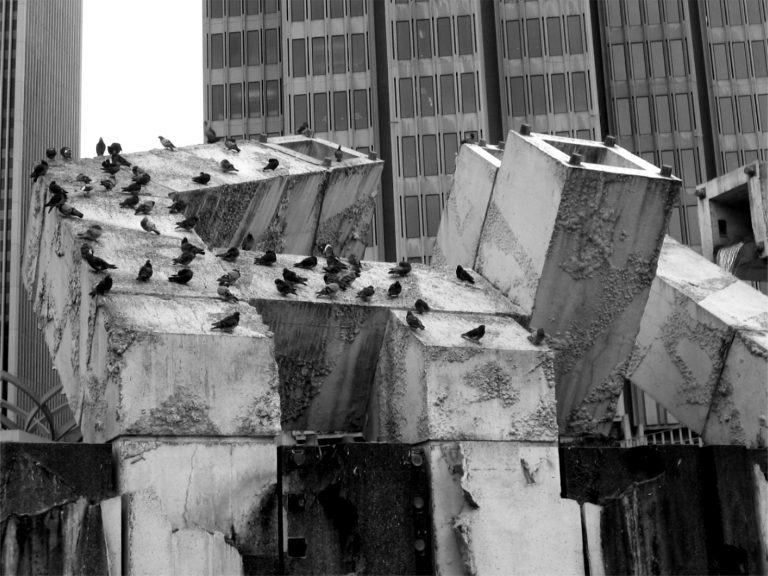
Digi Migi Art is an early body of work experimenting with photography during the dot-com era, when digital tools such as PhotoDraw were emerging. Using personal photographs as source material, the works layer in basic digital manipulation, transforming captured moments into new visual compositions.
These interventions reflect an intuitive, process-led approach to image-making, where editing becomes a space for discovery, reinterpretation, and the creation of something entirely new from the familiar.


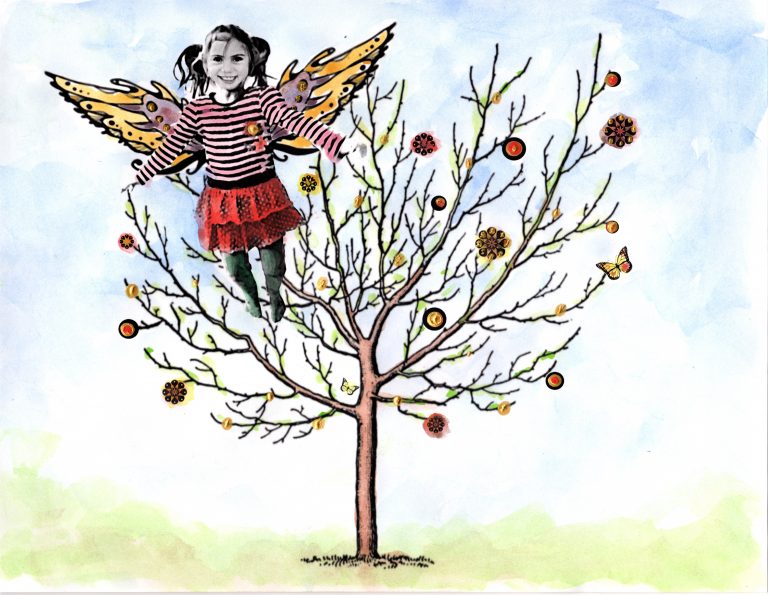
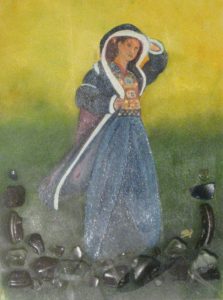
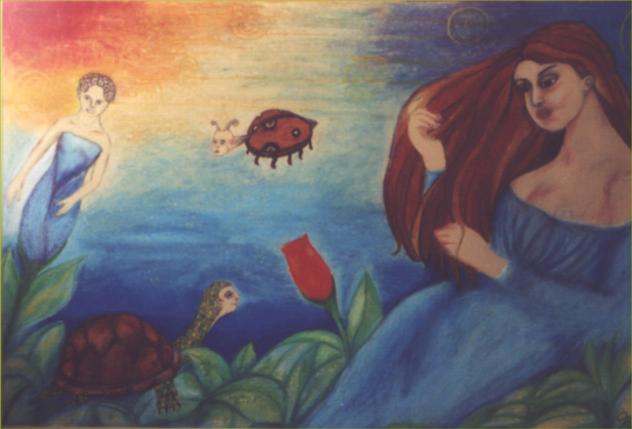
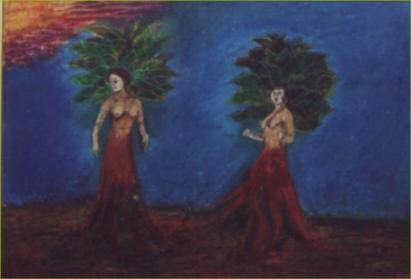
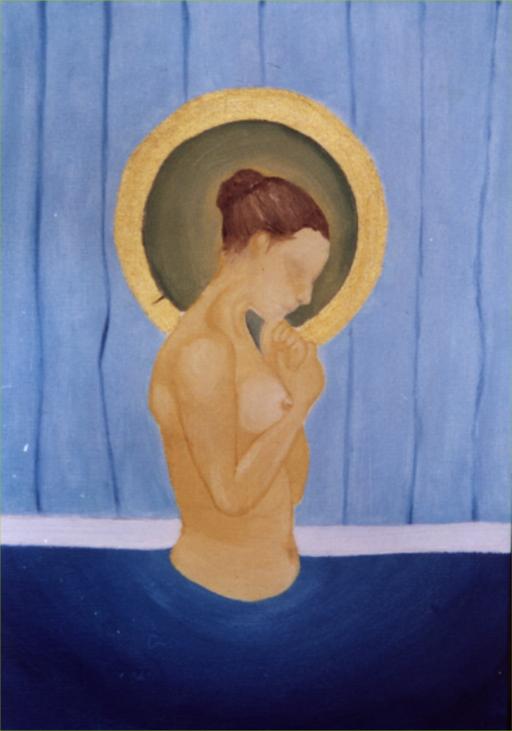
Lay.Lay.Lom Land presents early experimentations with materials, techniques, and style, depicting primarily female figures in states of freedom and effortless nonchalance. Set within imagined landscapes, the works explore empowerment not as resistance or struggle, but as ease, self-possession, and playful sovereignty.
A quiet duality runs through the work (stillness and movement, presence and absence), suggesting empowerment can hold contrasting states at once without needing resolution.
Through soft surrealism and symbolic gesture, this diverse body of work reimagines empowerment as an inner state of being: an embodied autonomy lived, felt, and imagined beyond the need for declaration.