Research consistently shows that the arts support physical, cognitive, and emotional health across the lifespan.
Creative expression has measurable physiological benefits. Studies provide evidence that making art can significantly reduce cortisol, the body’s primary stress hormone by up to 75%. Whether through painting, writing, dance, or music, the act of creating helps externalize emotions, regulate the nervous system, and foster mindfulness, relaxation, and connection.
Creative engagement can aid pain management, strengthen cognitive function, and stimulate memory and communication in individuals living with Alzheimer’s, helping slow cognitive decline while improving mood and quality of life. Among children and youth, participation in the arts enhances emotional regulation, empathy, focus, and academic performance, building resilience, confidence, and adaptive coping skills that support healthy development.
Beyond prevention and wellness, the arts play a powerful role in trauma recovery and PTSD. Trauma can leave invisible wounds, affecting memory, sleep, concentration, mood, and the body’s stress response system. Because traumatic experiences are often difficult to express in words, creative arts therapies provide a safe, non-verbal pathway for healing. There is no health without mental health!
The arts offer alternative ways for resilience, self-discovery, and mental well-being for every age and stage of life.
So—what’s your daily/weekly dose of art to support your health? Is it visual arts, theater or music?
Together with art therapist Thuli Wolf, we’ve created a simple introductory guide with creative exercises to help you get started.
Because mental health is brain health—and creativity can be part of caring for both!
Did you know?
A longitudinal research following nearly 7,000 adults aged 50+ found that engaging in artistic activities is associated with increased longevity, reflecting the arts’ positive impact on cognitive health, mental well-being, and overall quality of life. The study demonstrated a clear dose-response relationship:
• Participation once or twice a year was linked to a 14% lower mortality risk.
• Engagement every few months or more was associated with a 31% reduction in mortality risk.
Art4Development.Net’s Healing Arts Learning Program explores how creativity can support health across the lifespan, from prevention and stress management to mental health, cognitive development, ageing, chronic conditions, and care. Through informative conversations, introductory art therapy sessions, hands-on interactive workshops, health-focused exhibitions, and arts-based public health support initiatives, the program creates opportunities to learn, experience, and connect through the arts.
Rather than replacing medical care, the program aims to highlight how art and creative engagement can complement care, support wellbeing, strengthen connection, and help people navigate health challenges at different stages of life.
Interested in collaborating with us? We’d love to hear from you. Get in touch at info [at] art4development.net.
The Art & Science of Movement: An Interview with Dr. Jessica Phillips-Silver on Music, Dance & Health
What if the simple act of moving to music could strengthen your brain, support your health, and deepen your connection to others?
At the intersection of neuroscience, creativity, and wellbeing, rhythm is emerging as one of the most powerful tools we have; not just for expression, but for human development across the lifespan. Through the work of Jessica Phillips-Silver, we’re learning that music and movement are far more than art forms, they are essential to how we grow, connect, and heal.
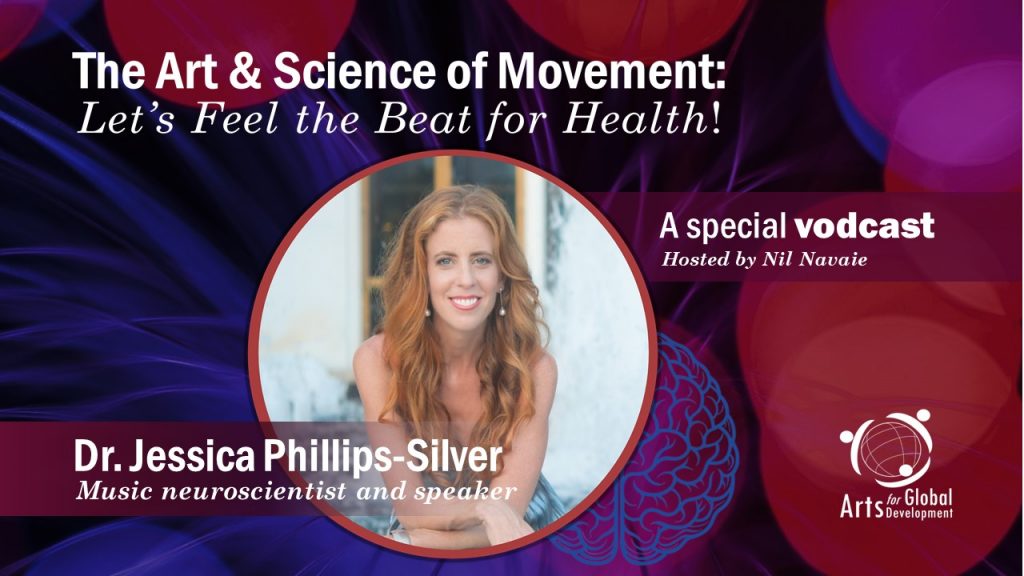
Nil Navaie, Founder of Art4Development.Net and an international health communications strategist, sat down with Dr. Jessica Phillips-Silver for a virtual conversation exploring how sound, music, and rhythm shape the human experience—from early childhood throughout our lives—and why being intentional about the sounds we surround ourselves with can support how we feel, connect, learn, and thrive.
In addition to discussing the biology and neuroscience behind rhythm, Dr. Jessica also shares insights into Finding Rhythm, its connection to Washington, DC’s go-go music culture, and more. Join the conversation.
Q: How does rhythm and music influence the brain and body—and why does it make us want to move?
Dr. Jessica: Music engages a widespread network of brain regions that are involved in listening and attention, movement and timing, emotion and memory, and more. And the effects are not limited to the brain- it also engages systems in the body that help us regulate stress and even prevent disease.
Rhythm has a special way of moving us, whether to dance or simply step or sway in time to the beat. This phenomenon, called rhythmic entrainment, is seen in humans from birth, and throughout childhood and adolescence the skills become increasingly developed and refined (especially with practice!).
And our musical tendencies, including moving to the beat and singing our favorite tunes, stay with us until the very late stages of our lives. In some cases, such as with dementia or Parkinson’s Disease, the ability to respond to music remains even when other parts of our health and identity are gone. Not only that, but those who have spent time in their lives making or moving to music see preventative effects later in life, for hearing, movement, cognitive and emotional skills.
Q: What role does music play in children’s cognitive development?
Dr. Jessica: Music and rhythm are incredible tools for cognitive development in children. The brain areas that are strengthened by music practice are also involved in language, attention and motor skills. What’s most important is that music integrates those areas so that the connections between them become stronger, and processing becomes more proficient and efficient.
Furthermore, when we see certain cognitive impairments or delays, including linguistic and motor, researchers can often see the roots of those delays in the brain’s processing of auditory sounds, timing, movement and attention. So for example, the rhythms in music and even language are both a tool for development and a signal when certain skills need more support. As we sing in my children’s musical, Finding Rhythm: “Rhythm grows your brain!”
Q: How do individuals who are deaf or hard of hearing experience rhythm and music?
Dr. Jessica: Feeling the beat is a multisensory phenomenon that is shared by most people, including so many in D/deaf and Hard of Hearing communities. In my own research and that of others in the field, we have seen that having reduced or even no access to sound does not prohibit finding rhythm in music, especially because rhythm engages not only the auditory system, but a set of systems that respond to the feeling of vibrations, plus the experience of our bodies moving in space whether we’re bobbing our heads, swaying or dancing. The great solo percussionist, Evelyn Glennie, who is profoundly deaf, teaches us that “sound is a form of touch”—and that enhances the feeling of rhythm in all of us!
Want to experience this for yourself? The next time you listen to a favorite song, especially one with a good beat or bass line, see if you can notice any body sensations, such as on your skin, or even in bones or your chest. Where do you FEEL the sound?
This simple awareness can become a powerful mindfulness practice, for both children and adults.
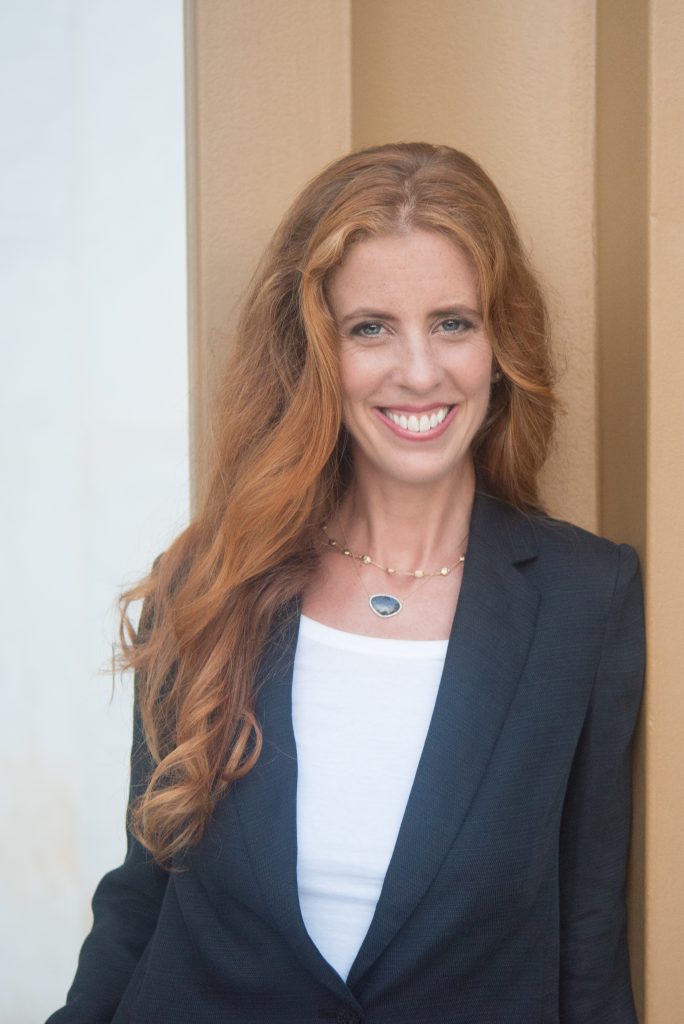
Dr. Jessica Phillips-Silver, music neuroscientist and speaker, founder of Growing Brains, and creator of the Finding Rhythm Music Project
Dr. Jessica Phillips-Silver’s scientific research, featured in Science Magazine, Discovery Channel, NPR, The Atlantic, and China Global, explores how musical rhythm shapes brain development across the lifespan.
She is a scientific contributor to multimedia, interdisciplinary exhibitions including the Notes to Neurons exhibit at the Chicago Museum of Science and Industry. Dr. Jessica’s musical, Finding Rhythm, which premiered at the Kennedy Center Family Theater, was covered by NBC4, DCist and dubbed “The most DC thing” by WUSA9 news. Since then the Finding Rhythm project has been implemented in schools from K-12 across Washington DC.
As an Adjunct Professor at Georgetown University, Dr. Jessica teaches her course on Music and the Brain to inspire future leaders across disciplines to integrate the empirical rigor of science with the creative power of music arts.
In her consulting through Growing BrainsTM, Dr. Jessica helps organizations in the arts, education and healthcare deepen their programming, using music arts to promote optimal brain growth and healing—especially through rhythm.
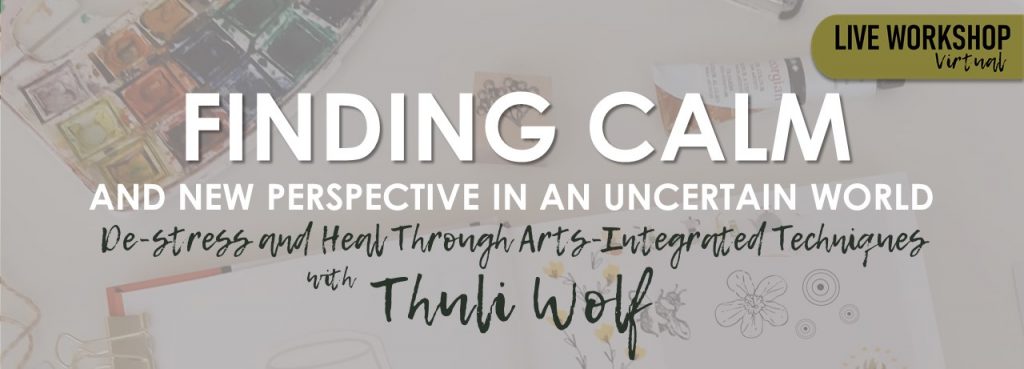
Interested in art therapy? Sign up to participate in our future sessions!
In a rapidly evolving world, uncertainty can feel overwhelming. Our virtual workshop, led by art therapist Thuli Wolf, offers simple, arts-based techniques to reduce stress, regain clarity, and navigate change with resilience.
During the introductory session, we’ll engage in hands-on creative exercises to explore how art can reframe challenges, restore balance, and foster a sense of community with peers navigating similar uncertainties.
No prior art experience needed—just bring an open mind to learn and a willingness to create.
Join us and discover the healing power of art in times of change!
“Making art means creating beauty where there was nothing.” T.Wolf

Thuli Wolf is a Berlin-based medical doctor, artist, and art therapist. In her sessions, she creates a safe space for self-expression, exploration, and transformation.
Thuli deeply believes in the healing power of art, seeing it as both playful and profound—a way to navigate life’s challenges. Her mission is to help people live more creative, and therefore healthier, lives.
As a speaker, Thuli shares her insights on the healing power of art at well-known events such as the Forward Festival and Creative Mornings. As an author, she writes about the relationship between creativity and mental health, with her work published in both German and English in outlets including mae magazine and ZEITjUNG. A member of the Advisory Board of Arts for Global Development, Thuli invites all to explore their inner artist through a variety of art techniques—reflecting, meditating, finding peace, and celebrating the power of collective creativity.
She offers workshops for individuals and teams, group therapy and private sessions. You can find more information about her services on thuliwolf.com.
Sources: Journal of the American Art Therapy Association; NIH 2023; Koch, Gruber, Martin, Oepen et al. (2018), Creative Arts Interventions for Stress Management and Prevention; Heijman, Wouters et al. (2024), Effectiveness of Trauma-Focused Art Therapy (PMC10826536); S. Chien Pierce (2023), Depictions of Trauma: How Art Can Heal Invisible Wounds (Guggenheim).